More than half of livestock farmers are over 55, in Italy and beyond.
In Cremona, the “Quelle del Latte” association
highlights the need for women farmers to take on strategic roles
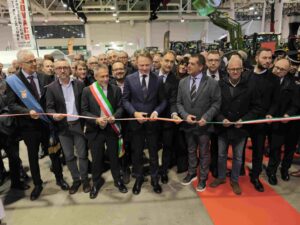
Cremona, 26 November 2026 – Livestock farming is not just a man’s job; it is also a woman’s profession. Above all, women’s presence has become essential to ensuring the continuity and growth of the sector. This was the key message to emerge from the conference “It’s Not a Man’s Job”, organised by the Quelle del Latte Association and CremonaFiere during the 81st edition of the Zootecniche Cremona International Exhibition.
Now in its third consecutive year as part of this major event in the dairy industry, which has become a key meeting point for livestock farmers from around the world, the conference focused on the urgent need for generational renewal in livestock farming.
The issue was highlighted by Paola Aguzzi, President of the association, which brings together more than 100 women farmers across Italy, in a sector where women now account for over 23% of the workforce.
“The future of this sector is female. It needs new people and new skills,” she explained. “We want to break through that proverbial glass ceiling that most of us still find ourselves beneath. We want to be taken seriously,” she continued. “This is a job for women because it requires resilience and precision. We also want women to reach strategic positions within the sector on the basis of merit, just as men do.”
The aim is therefore to extend women’s growing influence to other areas of livestock farming, such as goat milk production and agriculture. “Our goal is to join forces and strengthen our collective voice,” Aguzzi said. “Indeed, we are also in contact with women from other European countries, including France and Poland, because the desire to make this sector more open to women is shared across the continent.”
Joining the discussion from France was Fabienne Coletti, herself a livestock farmer, who described challenges similar to those facing Italy in terms of women’s representation in the sector. However, she noted that France is approaching the issue differently. She also stressed the scale of the generational renewal challenge.
“Demographic trends show that birth rates are declining, and more than 55% of livestock farmers in both France and Italy are over the age of 55,” she pointed out. “This means we will face a major generational renewal challenge, alongside the difficulties associated with ensuring profitability in agriculture. There is therefore a need to make the sector more inclusive, involve women and create opportunities for women who have the necessary skills.”
To encourage younger generations to consider a career in livestock farming, Coletti spoke about the meetings organised in schools to raise awareness of the opportunities available in the sector.
“We need to encourage young people to discover that agriculture and livestock farming can be their future, whether in Italy, Poland or France,” she added. “In France, for example, the issue of women’s representation is also being addressed within cooperatives, where leadership training courses are organised to prepare women for positions on boards of directors. There is now a fully fledged programme designed to prepare women to take on roles that would have been less accessible to them in the past,” she concluded. “This reflects a growing awareness that without women and young people, agriculture and livestock farming will have no future.”